
9mm vs. .380 ACP: Which Concealed Carry Caliber Is Right for You?
You may be wondering, “What’s the best concealed carry caliber?” That’s the never-ending debate among gun owners and firearm enthusiasts all over the world because the question is incredibly subjective. If you’ve been exploring this topic yourself, a .380 gun vs. 9mm gun is a subset you’ll eventually stumble across.
So, what is the difference between 9mm and .380? There are actually many.
This guide on pistol calibers takes a look at the .380 ACP and 9mm, two of the most common and well-known cartridges on the market.
Talk to our staff for a personalized recommendation.
What’s the Difference Between 9mm and .380 ACP?
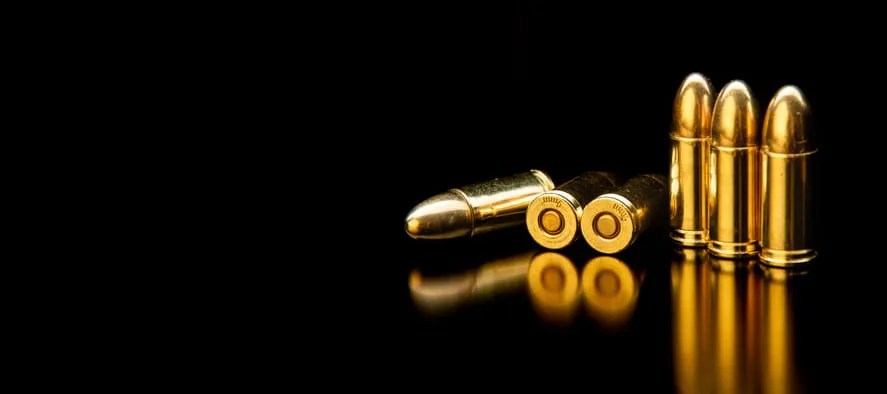
The most obvious difference between a .380 and 9mm is the caliber (width) of the projectile and the length of the cartridge. While both rounds are similarly sized, the 9mm has a longer cartridge, which means it can hold more powder. That extra powder means more velocity and energy, at the cost of a slightly larger gun and more felt recoil.
The 9mm Luger was developed in 1901, and the .380 ACP was developed in 1908. Think of the 9mm as the slightly older, bigger brother of the .380 ACP, even though they were developed half a world away from each other.
So, the core question is, do you want a slightly larger round with a bit more punch or a more compact round?
Stopping Power & Ballistics Compared
Once you look past the physical difference between .380 and 9mm, you’ll see that the two also vary in ballistic performance and stopping power. Muzzle velocity and energy are the standard starting points.
A typical 9mm round leaves the barrel around 1,100 to 1,300 feet per second (FPS) and generates roughly 350 to 450 foot-pounds of energy. A typical .380 ACP round runs closer to 850 to 1,000 FPS and 150 to 200 foot-pounds of energy. That extra powder in the 9mm is the reason for this difference.
Why is there so much hype and discussion around the 9mm? The FBI reignited the pistol caliber wars in the late 2010s and early 2020s with its move back to 9mm. The nation’s premier police agency adopted Hornady Critical Duty 9mm Luger +P 135-grain FlexLock ammunition as its standard service round.
The 9mm generally offers more penetration and a larger energy transfer on impact, compared to the .380 ACP. However, more energy doesn’t automatically make the 9mm more effective in every real-world scenario. You also have to consider shot placement, ammo selection, and your proficiency as a shooter.
When you choose the right round and firearm and back them up with skill, either cartridge can perform well.
Recoil & Shootability: Which Is Easier To Handle?
What is the difference between a .380 and a 9mm in terms of recoil? The .380 ACP earned its reputation here, as it has less powder, which means less recoil.
Generally, less recoil means you can deliver faster, more controlled follow-up shots. That advantage can be invaluable for a new shooter, smaller-framed person, or anyone who finds a full-size 9mm’s recoil fatiguing.
You can’t compare .380 to 9mm without looking at shootability, which is the other side of the recoil equation. .380 pistols tend to be small and lightweight. They also have short grips. If you have less grip to hold onto and the gun is very light, it can feel snappy.
A compact 9mm with a bit more grip and weight has more mass to absorb the recoil. Even though the round may be more powerful, the felt recoil can be similar or even less than a .380.
Concealability & Gun Size: 9mm vs. .380 Platforms
When it comes to concealability, you should place less focus on handgun calibers compared to the actual size of the weapon.
Concealability and gun size used to be the main arguments surrounding 9mm compared to .380. However, over the last decade or so, most major handgun manufacturers have released a variety of compact, subcompact, and micro firearms chambered in 9mm.
If you want the gun to be as small and concealable as possible, the .380 is tough to beat. However, modern subcompact and micro 9mm pistols have closed much of that gap. Trying out both options is the best way to find the right fit for you.
Ammo Cost and Availability
The .380 ACP compared to 9mm discussion also requires a look at ammo cost and availability. The 9mm is the most widely available handgun cartridge in the world. If you go into your local gun store, you’ll find many options. You can also find cheap practice ammo just about anywhere that deals in firearms and shooting accessories.
.380 ACP ammo tends to be a bit pricier. You may also have a harder time finding it in bulk, which can be a problem if you want to practice often.
Which Caliber Is Best for Concealed Carry?
There isn’t a one-size-fits-all option. Instead, focus on the caliber and firearm that is the right fit for your hands, body, and skill level.
Either can be a good defensive caliber when you take the time to build the skills and learn to carry responsibly.
Once you’ve decided on a caliber, our guide, Best Handguns for Range/CPL Carry in Michigan, can help narrow down your choice to a single handgun. Check it out or contact Uncoiled Firearms for one-on-one assistance.
Our Recommendation for First-Time Buyers
While it’s easy to get caught up on the difference between .380 and 9mm, the more important focus should be on what’s the right gun for you. The best way to explore your options is to try out both calibers.
If you’re not sure which will be the right choice for you, rent both calibers at Uncoiled Firearms. Contact our team to learn more.